Status Types
Status types define the impact vocabulary used across your status page.
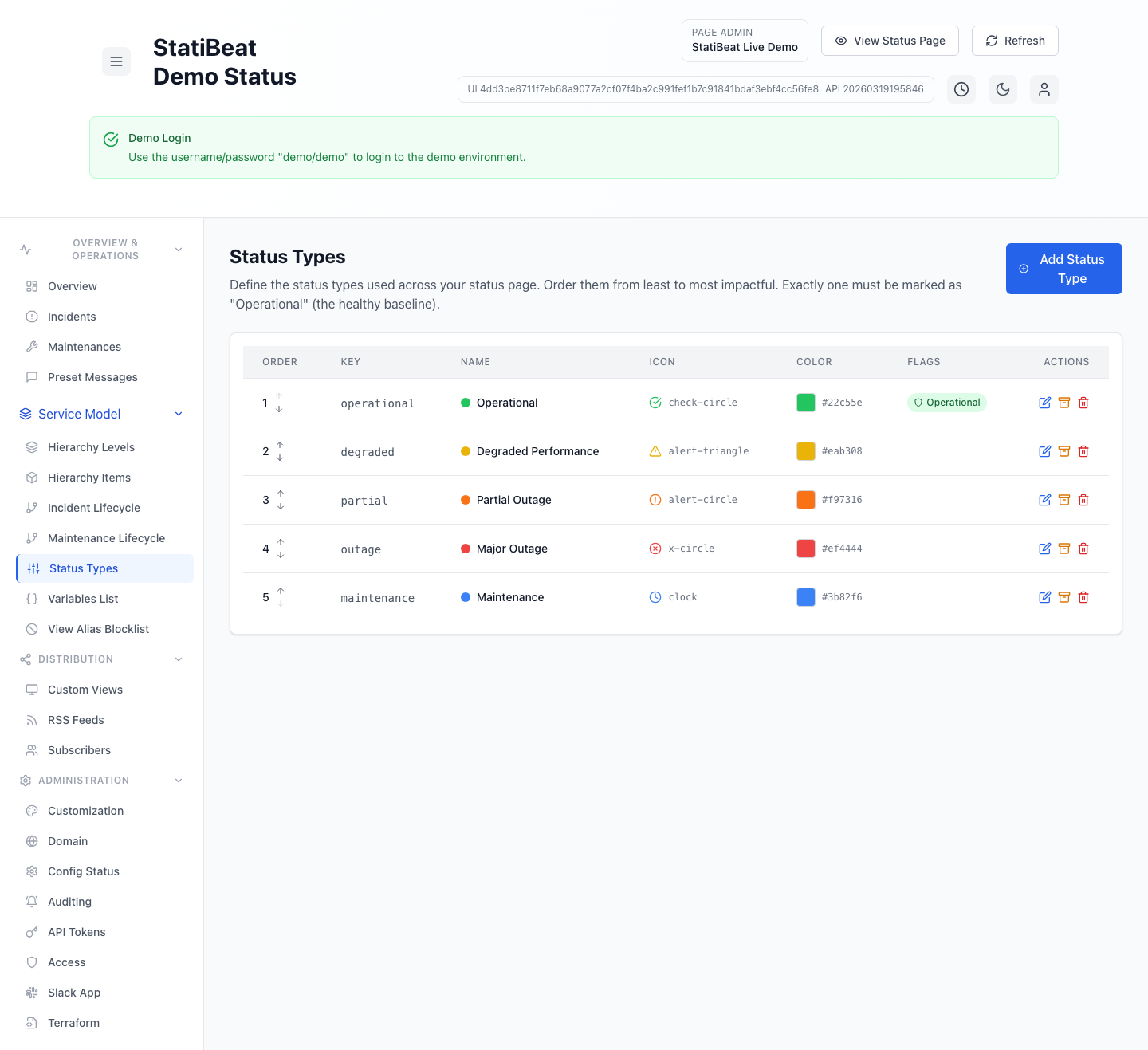
Keep status types ordered from least to most severe, because the current product treats that order as meaningful.
This guide is based on application/frontend/src/pages/admin/StatusManagement.jsx.
What a status type includes
The current status type form supports:
keydisplay namedescriptioniconcoloris operationalarchived
The current admin page also supports:
- create
- edit
- delete
- reorder
- initialize defaults
- archive and unarchive
Operational baseline
In the current application, exactly one status type must be marked as operational.
That operational status is the healthy baseline used when no incidents are active.
The operational flag is special. It is not just a label. The system expects there to be exactly one healthy baseline status.
Ordering behavior
The UI explicitly tells admins to order status types from least to most impactful.
That makes status order part of your communication model:
- low-severity states should come earlier
- higher-impact states should come later
- the order should match how your team thinks about escalation
Keys, names, and archiving
A few current behaviors are worth calling out:
- the
keyis normalized to lowercase alphanumeric, underscore, and hyphen characters - the key cannot be changed after creation
- archived statuses remain available for history but should not be used for new incidents
That makes archiving a better fit than deletion when you need to retire an old status without breaking historical meaning.
Icons and visual language
The current UI allows choosing from predefined icon options and combining them with a color.
This helps the same status read clearly in:
- admin views
- public cards
- hierarchy badges
- incident displays
Practical guidance
Good status types are:
- easy for operators to choose consistently
- easy for customers to understand quickly
- few enough to be useful, but enough to distinguish real impact levels
If multiple statuses feel interchangeable, your team is unlikely to use them consistently during an incident.
When to archive instead of delete
Archive a status when you no longer want it available for new updates but still want old incidents and history to preserve their original meaning.